Basmati Rice
Exporter from India
Bulk supplier of Indian Basmati rice to importers, distributors, retail brands and food businesses worldwide. Through a strong network of verified suppliers we export 1121, 1718, 1509, 1885, 1401, Pusa, Sugandha and Sharbati in Raw, Steam, White Sella, Lemon Sella and Golden Sella, sourced from GI-zone mills in Punjab and Haryana. A dedicated EU MRL compliant, non-pesticide line is available, with sample-first ordering and full export documentation for every destination.
Why the world sources
Basmati from India
Basmati is a long-grain aromatic rice grown in the Indo-Gangetic plains at the foothills of the Himalayas. India is the world's largest exporter of Basmati rice and ships to roughly 150 countries. Authentic Basmati carries a Geographical Indication (GI) tag covering seven Indian states, protecting both its origin and its defining characteristics: extra-long slender grains, a distinctive natural aroma, and grains that elongate rather than swell when cooked.
India exported close to 6.06 million tonnes of Basmati rice in FY 2024 to 2025, worth roughly US$5.94 billion, holding its position as the world's leading Basmati supplier. Demand is anchored by the Gulf (Saudi Arabia, Iraq, Iran, UAE and Yemen) and is growing steadily across North America, Europe, Africa, Australia and Southeast Asia as Basmati becomes a mainstream long-grain rice in retail and foodservice worldwide.
Our Basmati range spans the full spread of modern Indian varieties: 1121, the global benchmark for extra-long-grain rice; 1718 and 1885, high-yielding 1121-derived lines with strong elongation; 1509, an early-maturing long-grain variety; and 1401, a reliable aromatic line; alongside Pusa, Sugandha and Sharbati for mainstream and value retail. Each is offered in Raw, Steam, White Sella, Lemon Sella and Golden Sella forms, with brown (unpolished) grain available on select varieties.
What separates a reliable Basmati supplier from a risky one is not the headline price. It is consistency between sample and shipment, genuine variety purity, documented ageing, and above all compliance with destination-country pesticide residue limits. The European Union and United Kingdom enforce a strict 0.01 ppm limit on Tricyclazole, a fungicide commonly used in paddy cultivation, and non-compliant consignments are rejected at port. This single issue causes more Basmati import losses than any other.
Through a strong network of verified suppliers, we source from APEDA-registered mills in the GI-protected belts of Punjab and Haryana, with a dedicated EU MRL compliant, non-pesticide line for residue-sensitive markets. Every lot is lab-tested against the stricter of EU and destination-market limits, variety purity and grade are locked in writing, and a lot-matched sample is dispatched before every first order. The result is Basmati that arrives exactly as specified, clears customs without surprises, and performs consistently order after order.
Basmati rice varieties
we export from India
All varieties sourced through a strong network of verified suppliers from APEDA-registered mills, naturally aged for consistent elongation, and available in Raw, Steam, White Sella, Lemon Sella and Golden Sella grades. Below are three lead varieties, followed by the complete variety and grade reference covering 1718, 1509, 1885, 1401 and Sugandha.
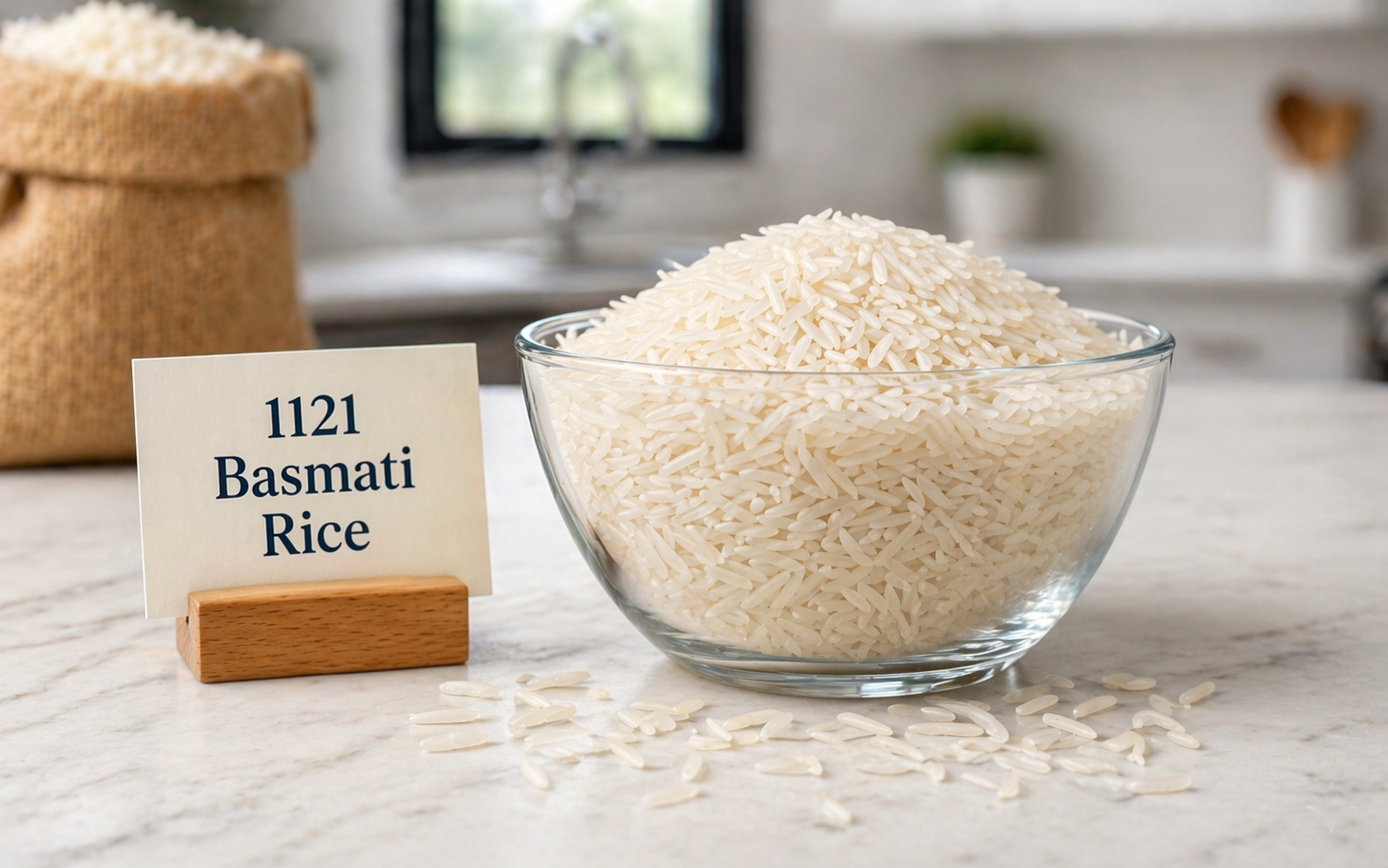
India's flagship export Basmati and the global benchmark for extra-long-grain rice. Extra-extra long grain that elongates to over 22 mm on cooking, with a strong natural aroma and non-sticky, fully separated grains. The default choice for biryani houses, retail brands and foodservice worldwide. Available in a non-pesticide, EU MRL compliant grade.
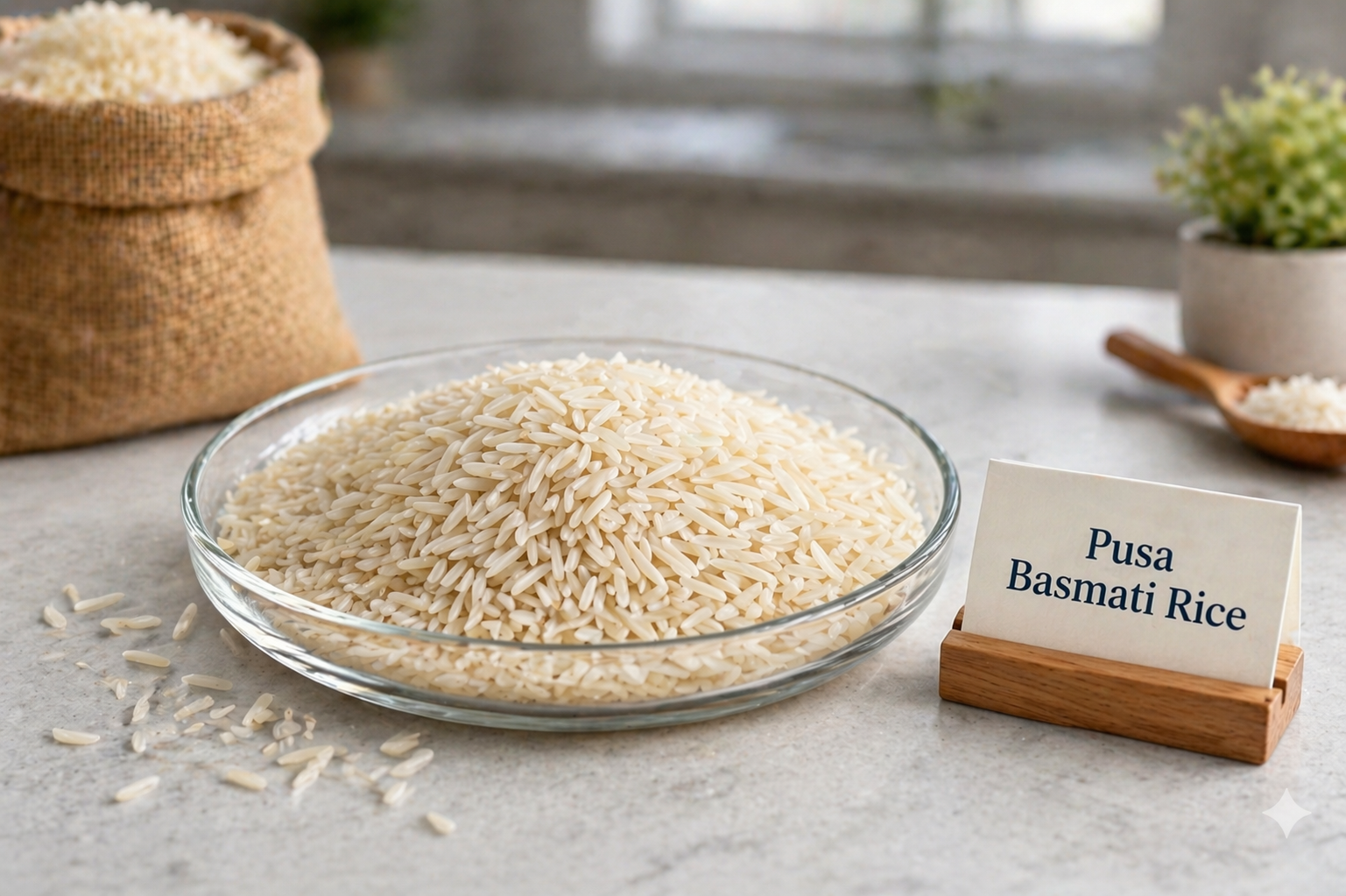
A high-yielding aromatic variety developed at the Indian Agricultural Research Institute (Pusa), with strong natural aroma and an excellent cost-to-quality ratio. The workhorse of global Basmati retail across Gulf, African and Asian markets. The wider Pusa-bred family also includes the 1718 and 1401 export lines we supply. Available in Raw, Steam, Sella and Golden Sella, including an EU compliant grade.
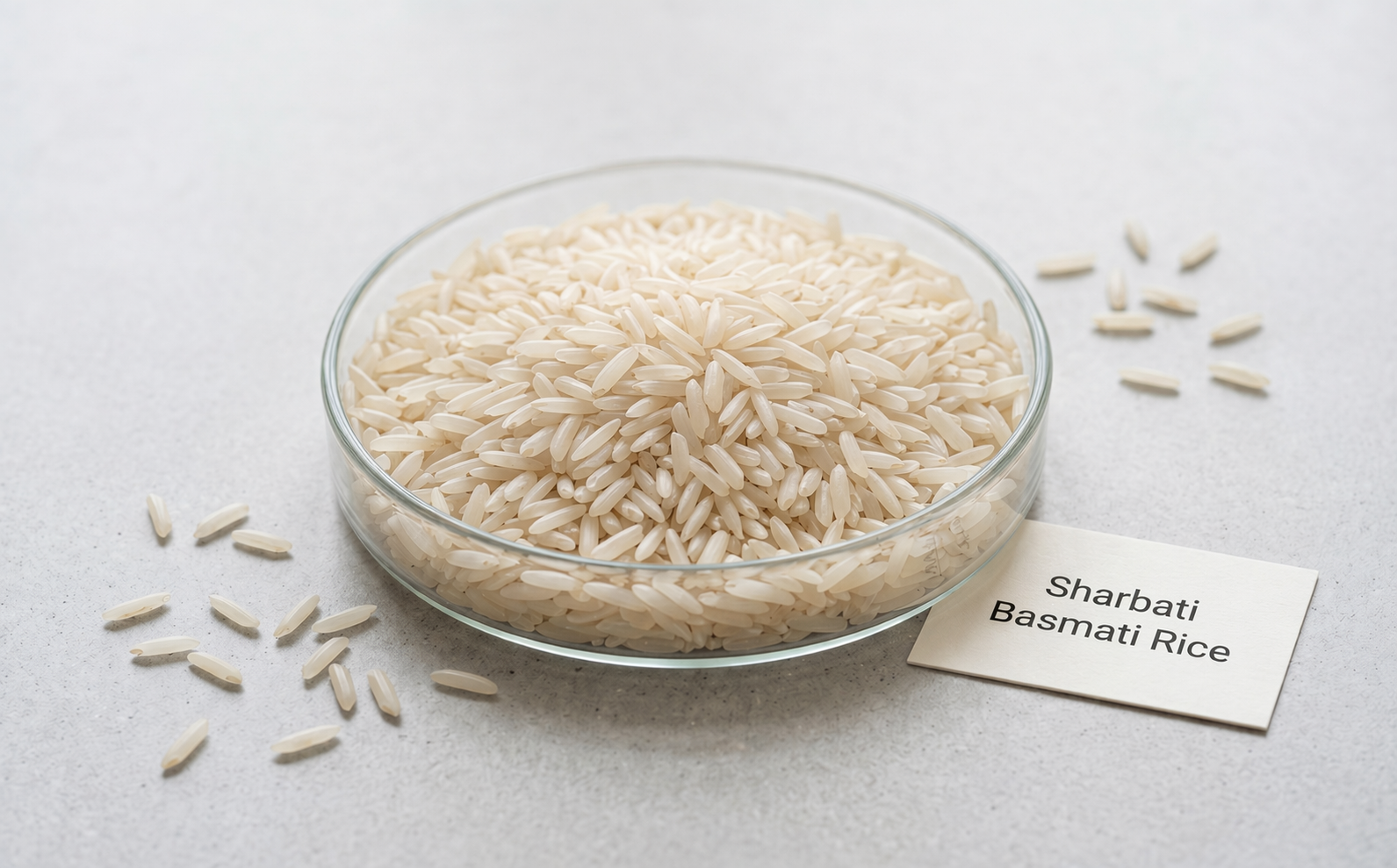
Known for natural sweetness, soft texture and pleasant aroma at an accessible price point. A strong choice for value retail segments and private-label brands targeting price-conscious yet quality-aware consumers across the Middle East, Africa and South Asia. Available with an EU compliant grade.
Raw, Steam, White Sella,
Lemon Sella and Golden Sella
Each Basmati variety is available in multiple processing forms. The form affects colour, cooking behaviour, breakage resistance and shelf appeal, and different markets prefer different forms. We help you match the right form to your destination and end use.
Raw (White)
Milled and polished without parboiling. Creamy white grains, classic Basmati aroma and the longest visible grain. Preferred for retail and traditional biryani markets. Slightly higher breakage sensitivity in cooking.
Steam
Lightly steam-processed before milling. Firmer grain, lower breakage, free-flowing cooked texture and retained aroma. A balanced all-round choice for both retail and foodservice. Popular across the Gulf and Europe.
White Sella (Parboiled)
Parboiled in the husk, then milled. Hard, sturdy grains that stay firm and fully separated when cooked, with very low breakage. The top choice for large-volume catering, foodservice and biryani chains where consistency matters.
Lemon Sella
Parboiled to a soft lemon-yellow tint, lighter than Golden Sella. Firm, low-breakage grain with excellent separation, favoured across several Gulf and Middle East markets for biryani and mandi where a pale golden grain is preferred.
Golden Sella
Parboiled with a deep golden colour from the husk. Maximum firmness, lowest breakage, excellent grain separation and long shelf life. Dominant in Gulf, Iraqi and Iranian markets for biryani and mandi.
A dedicated EU MRL compliant, non-pesticide line
For the European Union, United Kingdom and other residue-sensitive destinations, our supplier and manufacturer network maintains a separate non-pesticide, EU MRL compliant Basmati line. This covers 1121, 1718, 1509, 1401, Pusa, Sugandha and Sharbati, grown under residue-controlled cultivation and lab-tested for Tricyclazole and the full pesticide panel against the stricter of EU and destination limits before dispatch. Specify the EU compliant grade at enquiry and we will quote and document accordingly.
Full variety and
specification reference
Our complete Indian Basmati range with crop year, available forms and EU compliant line availability. Every lot is third-party lab tested before shipment through our supplier and manufacturer network, with a Certificate of Analysis supplied per consignment.
| Variety | Crop Year | Available Forms | EU Compliant Line | Best For |
|---|---|---|---|---|
| 1121 Basmati | 2025 | Raw, Steam, Sella, Lemon Sella, Golden Sella | Yes | Retail, biryani, foodservice |
| 1718 Basmati | 2025 | Brown, Raw, Steam, Sella, Lemon Sella, Golden Sella | Yes | Retail, bulk catering, distribution |
| 1509 Basmati | 2024 / 2025 | Brown, Raw, Steam, Sella, Lemon Sella, Golden Sella | Yes | Value retail, bulk catering |
| 1885 Basmati | 2025 | Raw, Steam, Sella, Golden Sella | On request | Retail, distribution |
| 1401 Basmati | 2025 | Raw, Steam, Sella | Yes | Retail, foodservice |
| Pusa Basmati | 2025 | Brown, Raw, Steam, Sella, Golden Sella | Yes | Mainstream retail, distribution |
| Sugandha Basmati | 2025 | Steam, White Sella, Lemon Sella, Golden Sella | Yes | Bulk markets, price-sensitive buyers |
| Sharbati Basmati | 2025 | Raw, Steam, Sella, Golden Sella | Yes | Value retail, private label |
| Quality Parameter | 1121 | 1718 | 1509 | Pusa | Sharbati |
|---|---|---|---|---|---|
| Average grain length (raw) | 8.30 to 8.40 mm | 8.00 to 8.20 mm | 8.20 to 8.40 mm | 7.70 to 7.90 mm | 7.40 to 7.60 mm |
| Average cooked length | 22 mm+ | 18 to 20 mm | 20 mm+ | 18 mm+ | 17 mm+ |
| Moisture content | Max 12% | Max 12% | Max 12% | Max 12% | Max 12% |
| Broken grains | Max 1% | Max 2% | Max 2% | Max 2% | Max 2% |
| Foreign matter | Nil | Nil | Nil | Nil | Nil |
| Average ageing period | 12 to 24 months | 12 months | 12 months | 12 months | 12 months |
| Crop year | 2025 | 2025 | 2024 to 2025 | 2025 | 2025 |
| Pesticide residue | Per EU / destination MRL | Per EU / destination MRL | Per EU / destination MRL | Per EU / destination MRL | Per EU / destination MRL |
| EU compliant line | Yes | Yes | Yes | Yes | Yes |
| FSSAI (supplier network) | Yes | Yes | Yes | Yes | Yes |
| Phytosanitary certificate | Yes | Yes | Yes | Yes | Yes |
| Halal certificate | On request | On request | On request | On request | On request |
| Available forms | Raw, Steam, Sella, Lemon, Golden | Brown, Raw, Steam, Sella, Lemon, Golden | Brown, Raw, Steam, Sella, Lemon, Golden | Brown, Raw, Steam, Sella, Golden | Raw, Steam, Sella, Golden |
Typical values shown for guidance. Final grade, grain length and breakage are confirmed per lot on the Certificate of Analysis. All certifications shown are held by the supplier and manufacturer network. Other varieties such as Traditional and Dehraduni Basmati can be sourced on request.
Eight Basmati sourcing risks
and how we remove them
Most Basmati import problems are predictable and preventable. After working through what goes wrong for importers across the Gulf, Europe, Africa and North America, the same eight risks come up again and again. Here is how Alstoe addresses each one before it becomes your problem.
EU and UK pesticide rejection (Tricyclazole).
The single biggest cause of Basmati import losses. The EU and UK enforce a 0.01 ppm limit on Tricyclazole, a fungicide widely used in paddy. Non-compliant containers are detained, rejected or destroyed at port, and the importer absorbs the freight, demurrage and lost-sale cost.
A dedicated non-pesticide line, MRL tested
For the EU, UK or any MRL-sensitive market we supply from our non-pesticide, EU compliant line. Every consignment is lab-tested for Tricyclazole and the full pesticide panel against the stricter of EU and destination limits before dispatch. We source from traceable, residue-monitored paddy through our supplier network and ship the lab report with the consignment. No surprise detentions at destination.
Sample is clean. Container is blended.
The classic Basmati switch. The supplier sends a clean, long-grain sample, then loads a container blended with shorter grain, higher breakage or old stock buried in the middle of the lot. By the time the buyer discovers it, payment is gone.
Lot-matched sample and grade lock
What you approve is exactly what loads. We dispatch a lot-matched sample before every first order, draw composite pre-shipment samples from across the production lot, and lock variety, grade, grain length and breakage in writing on the order confirmation. Third-party inspection (SGS, Intertek) available at loading on request.
Variety adulteration. 1121 cut with cheaper grain.
Pure 1121 commands a higher price, so a common fraud is blending it with cheaper long-grain varieties or non-Basmati that looks similar to the eye. The buyer pays a 1121 price for a mixed lot, and end customers notice the inconsistent cooking and aroma.
Single-variety purity guarantee
We guarantee variety purity in writing and can arrange purity verification, including DNA-based variety testing on request for high-value contracts. Direct mill sourcing through our supplier network means the lot is controlled from paddy to packing, so there is no opportunity for blending in the supply chain between us and you.
"Aged" rice that was never aged.
Properly aged Basmati elongates more, cooks fluffier and carries stronger aroma, so aged rice sells at a higher price. Some suppliers label fresh-crop rice as aged. The buyer pays the difference but gets grain that breaks and clumps on cooking, disappointing their customers.
Documented ageing with mill records
When you order aged Basmati, we supply the ageing period backed by mill storage records, and the lot-matched sample lets you verify elongation and texture before you commit. We are transparent about crop year and ageing on every quote, so you know exactly what you are buying.
High moisture means weight fraud and spoilage.
Rice shipped above safe moisture levels weighs more (so the buyer pays for water) and is prone to clumping, odour and fungal growth in transit and storage. A 2 to 3% moisture excess across a container is a meaningful hidden cost and a spoilage risk.
Moisture tested and certified per lot
Moisture is tested and certified at max 12% on the Certificate of Analysis for every consignment. Combined with proper bagging and container lining for long-haul routes, your rice arrives at the right weight and in sound, storable condition.
Broken grain percentage above what was agreed.
Broken grains reduce visual appeal, cooking performance and resale value. A lot quoted at 1% broken that arrives at 5% changes the economics of the order, especially for retail and brand buyers whose customers expect whole, intact grains.
Breakage locked and lab verified
Maximum broken-grain percentage is agreed in writing and verified by lab analysis on the Certificate of Analysis. If a delivered lot exceeds the contracted breakage tolerance, we make it right. The spec you agree is the spec you receive.
Quality drifts after the first good order.
A supplier sends an excellent first container to win the relationship, then quietly drops quality on repeat orders once the buyer is committed. The importer is left re-checking every shipment and constantly renegotiating, which erodes trust and consumes time.
Same spec, every order, direct from mill
Because we contract directly with the same APEDA-registered mills in our supplier network, we hold variety, grade and quality constant across repeat orders. Every consignment gets the same lab testing and documentation as the first. We are built for long-term supply relationships, not one-off transactions.
Documentation gaps stall customs clearance.
Missing or incorrect paperwork is a leading cause of port delays. A wrong HS code, a missing phytosanitary certificate, an absent Certificate of Origin or non-compliant labelling can hold a container for days or weeks, racking up demurrage and detention charges.
Complete, destination-aware document set
We prepare the full export document set (invoice, packing list, BL, COA, Phytosanitary, Certificate of Origin, fumigation, and destination-specific certificates such as Halal or EIC health certificate for the EU) accurately and on time, pre-aligned to your customs broker's requirements. Clean clearance, both ends.
Where authentic
Basmati comes from
Genuine Basmati can only be grown in the Indo-Gangetic plains at the foothills of the Himalayas. Indian Basmati carries a Geographical Indication covering seven states. We source through our verified supplier network from the highest-quality producing belts in Punjab and Haryana, where soil, water and climate combine to produce the longest, most aromatic grain.
Punjab
Haryana
Western UP & Uttarakhand
J&K, Himachal & Delhi
Tested and documented
for every consignment
Every lot is third-party lab tested before shipment, with a Certificate of Analysis supplied per consignment. We test against the stricter of EU and destination-market limits through our supplier and manufacturer network so your rice clears customs cleanly, wherever it lands.
Physical Parameters
- Average grain length (1121)8.30 mm+
- Cooked elongation (1121)22 mm+
- Moisture contentMax 12%
- Broken grainsMax 1 to 2% (as agreed)
- Foreign matterNil
- Damaged / discoloured grainsWithin agreed tolerance
- Chalky grainsMinimal, lot dependent
- Average ageing12 to 24 months
Chemical & Compliance
- Tricyclazole (EU / UK)Within 0.01 ppm limit
- Pesticide MRL panelPer EU 396/2005 & destination
- EU compliant, non-pesticide lineAvailable
- AflatoxinWithin destination limits
- Heavy metalsWithin Codex / EU limits
- APEDA registrationSupplier mill network
- EIC inspection (EU/UK)Arranged where required
- GI originDocumented, 7-state zone
Flexible packaging
for every buyer
From retail consumer packs to bulk wholesale bags, with full private-label printing support. We match packaging to your market's retail norms, language requirements and shelf format.
PP / vacuum / BOPP
PP woven / non-woven / BOPP
PP woven / BOPP
Jute / PP woven
Where we ship
Indian Basmati rice
We quote CIF, FOB and CFR to ports worldwide. Indian Basmati moves through major lanes to the Gulf, Europe, North America, Africa and Asia-Pacific. Click an active Gulf destination for country-specific import requirements, port details and terms.
Basmati for every
kind of buyer
From bulk wholesale to retail-ready private label, we match variety, form, grade and packaging to your business model, target market and price tier.
Importers & Distributors
Food importers and distributors serving onward retailers, wholesalers and foodservice. Need consistent quality, reliable volume and price stability across repeat orders.
Best fit: 1121, 1718, Pusa, bulk 25 / 50 kg, Steam & SellaRetail & Supermarket Chains
Grocery chains, ethnic supermarkets and hypermarkets stocking branded and own-label Basmati. Need consistent grain appearance and reliable retail-pack supply.
Best fit: 1121, 1509, 1718, 1 / 5 kg retail packsPrivate Label Brands
D2C, retail and e-commerce brands building their own Basmati lines. Need custom artwork, destination-compliant labelling and dependable quality behind their brand.
Best fit: Custom packaging, OEM, any varietyFoodservice & Catering
Biryani chains, caterers, cloud kitchens and hospitality groups needing grain that stays firm and separated at volume. Sella forms are built for this.
Best fit: White Sella, Lemon Sella, Golden Sella, bulkWholesale & Cash-and-Carry
Wholesale markets and cash-and-carry operators moving high volume at competitive prices. Need dependable mid-tier varieties and consistent bulk supply.
Best fit: Pusa, Sugandha, Sharbati, 1509, 25 / 50 kgGourmet & Specialty Retail
Specialty food retailers selling heirloom and aged rice. Need authentic aged 1121 and Traditional Basmati with documented origin and ageing.
Best fit: Aged 1121, Traditional, retail packsHow to import Basmati
rice from India
A simple, transparent and fully documented process from first enquiry to delivered container.
Export documents with
every Basmati shipment
Complete, accurate and on-time paperwork, pre-aligned to your customs requirements, so clearance is never delayed at either end.
Why buyers choose Alstoe
for Basmati rice imports
What separates us from the typical Indian rice exporter.
Direct Mill Sourcing
Through a strong network of verified suppliers, we source from APEDA-registered mills in the Punjab and Haryana GI belt. Working directly with mills means authentic single-variety product and full traceability from paddy to packing.
No blending · full traceabilitySample Before Every Order
We never ask you to commit to a container without approving a lot-matched sample first. What you approve is exactly what loads and exactly what arrives at your destination port.
Lot-matched · spec locked in writingMRL & Compliance Expertise
We maintain a non-pesticide EU compliant line, test against the stricter of EU and destination pesticide limits, arrange EIC inspection for Europe, and handle Halal and Arabic labelling for GCC. No surprises at the destination port.
EU MRL · EIC · Halal ready24-Hour Quote Turnaround
Share your requirement and receive a full CIF, FOB or CFR quote within 24 hours, any day of the week, with clear specifications, grade options and lead time.
Fast · clear termsOne Dedicated Contact
From enquiry to delivery you work with one relationship manager, not a call centre. WhatsApp-responsive and experienced in international import requirements and customs.
Founder-led · WhatsApp responsiveBuilt for Long-Term Supply
We hold variety, grade and quality constant across repeat orders, with the same lab testing and documentation every time. We would rather build a multi-year relationship than win a single deal.
Consistent · repeat-order reliableBasmati rice import
questions, answered
The questions importers, distributors and retail buyers ask most often before placing their first Basmati order. For anything not covered here, get in touch and we respond within 24 hours.
Which Basmati rice varieties do you export from India?
What is the difference between Raw, Steam, White Sella, Lemon Sella and Golden Sella?
Do you supply a non-pesticide or EU compliant Basmati?
How do you ensure compliance with EU and UK pesticide limits?
What is the minimum order quantity for Basmati rice export?
Can I get a sample before placing an order?
Do you export Basmati outside the Middle East?
How do you guarantee variety purity and prevent blending?
What does "aged" Basmati mean and do you supply it?
Do you quote CIF, FOB and CFR?
What payment terms do you accept?
Is your Basmati rice Halal certified?
Can you do private-label Basmati for retail brands?
What is the HS code for Basmati rice?
Which Indian ports do you ship from and what are transit times?
How is Basmati packed and protected for long-haul shipping?
Why should I buy Indian Basmati rather than from elsewhere?
Ready to import Basmati rice from India?
Share your variety, form, quantity, destination port and payment terms. We respond within 24 hours with a detailed quotation, specifications, sample availability and clear next steps.