
Import Basmati Rice from India to the UK
A clear, compliance-first guide to sourcing GI-authentic Indian basmati for the United Kingdom, covering APEDA suppliers, UK residue limits, Defra documentation and shipping. Alstoe India Exports connects UK importers and wholesalers with a strong network of verified suppliers.
How to import basmati rice from India to the UK
To import basmati rice from India to the UK, the buyer trades as a registered UK business with an EORI number and works with a customs agent, while the Indian supplier holds an Import Export Code (IEC) from the DGFT and is registered with APEDA. Basmati is a GI-protected product, so authentic grain from India's recognised growing regions is used. The UK applies strict maximum residue levels, notably for the fungicide tricyclazole at 0.01 mg/kg, so every consignment is tested and travels with an independent certificate of analysis, alongside a Defra phytosanitary certificate, a certificate of origin, a fumigation certificate and a health certificate. Cargo ships from Mundra or Nhava Sheva (JNPT) to UK ports such as Felixstowe or Southampton, where standard UK import duty and VAT apply on clearance.
What you need on each side of the trade
The requirements split cleanly into what the Indian exporter arranges and what the UK importer handles. Use this as a checklist before your first shipment.
- Import Export Code (IEC), issued by DGFT
- APEDA registration (RCMC) for scheduled products
- GI-authentic basmati from recognised regions
- Defra phytosanitary certificate for the consignment
- Fumigation certificate and certificate of origin
- Certificate of analysis meeting UK residue limits
- Registered UK business with an EORI number
- Customs agent or broker for the import declaration
- Compliance with UK food standards and labelling
- UK maximum residue levels, including tricyclazole
- VAT registration to reclaim import VAT
- Import duty and VAT settled on clearance
How much basmati rice does the UK import from India?
India supplies the majority of the world's basmati rice, and it is the United Kingdom's largest rice supplier.
Close to a third of all the rice brought into the UK comes from India, which makes India the country's biggest rice supplier, and the majority of the UK's basmati is Indian. Demand runs across the retail grocery trade, wholesale and cash and carry, food service and the large South Asian community. Buyers value consistent grain length, aroma and clean residue results, so quality and testing matter as much as price on this route.
Under the UK and India trade agreement, basmati stays classed as milled rice, which is outside the agreement's tariff cuts, so it continues to attract the UK's standard import duty. The agreement does, however, recognise Indian certification for basmati, which is designed to ease inspection over time.
Trade context reflects published UK food-standards data on rice imports. Shares and volumes vary year to year with harvest, policy and demand.
Importing basmati rice from India to the UK, step by step
Confirm the Indian supplier's registrations
The supplier holds an IEC from the DGFT and is registered with APEDA, and supplies GI-authentic basmati from India's recognised growing regions. This is the base for a compliant, traceable export.
Set up the UK import side
Trade as a registered UK business with an EORI number, appoint a customs agent, and register for VAT so import VAT can be reclaimed. Agree the variety, grade, packing and English labelling.
Test to UK residue limits
Because the UK enforces strict maximum residue levels, notably for tricyclazole at 0.01 mg/kg, the consignment is tested by an accredited lab and travels with an independent certificate of analysis before shipping.
Prepare the documents
Defra phytosanitary certificate, certificate of origin, commercial invoice, packing list, fumigation certificate and health certificate are compiled so the cargo clears UK border controls cleanly.
Ship to a UK port
Cargo loads at Mundra or Nhava Sheva and sails to Felixstowe, Southampton or London Gateway. Rice usually moves in 20 ft containers, holding roughly 20 to 28 tonnes depending on packing.
Clear customs and take delivery
The customs agent files the import declaration, standard UK import duty and VAT are settled, and the cargo is released to the buyer's warehouse or distribution point.
What the Indian exporter must have in place
Registrations and origin
- Import Export Code (IEC) from the DGFT
- APEDA registration cum membership for basmati
- GI-authentic grain from recognised regions
Quality and residues
- Certificate of analysis meeting UK residue limits
- Independent lab report for tricyclazole and other residues
- Defra phytosanitary and fumigation certificates
Trade documents
- Certificate of Origin from an authorised agency
- Commercial invoice and packing list
- Bill of lading from the shipping line
Food safety and quality certifications such as FSSAI, HACCP and ISO are held across the supplier and manufacturer network, and the relevant certificates travel with each consignment. Because the UK applies strict residue limits, consignments are tested and travel with a certificate of analysis, and Alstoe coordinates the paperwork end to end so a UK buyer receives a document set that matches the order and UK requirements.
Rules that apply on entry into the UK
Residue limits (MRL)
- The UK enforces strict maximum residue levels
- Tricyclazole is limited to 0.01 mg/kg
- Independent lab reports are obtained before shipping
Food standards and labelling
- Compliance with UK food standards
- English labelling with the required product and allergen information
- GI-authentic basmati from recognised regions
Customs and border
- Registered UK business with an EORI number
- Customs agent files the import declaration
- Defra phytosanitary certificate for the consignment
UK residue testing is the point most consignments are judged on, so it is handled first, not last. Requirements are set by the UK authorities and can change, so the exact certificate set is confirmed for each shipment before loading.
What applies on cost and clearance
Basmati is classed as milled rice, which sits outside the tariff cuts in the UK and India trade agreement.
This means basmati continues to attract the UK's standard import duty rather than a preferential rate, and standard-rate VAT, currently 20 percent, applies on clearance. VAT is reclaimable for a VAT-registered importer. The exact duty and VAT for a given consignment are calculated by the importer or their customs agent against the current UK tariff, so those figures are confirmed at the time of import rather than quoted here.
Documents that travel with the shipment
For clean clearance at UK border controls, the following accompany a basmati consignment. The precise set is confirmed against the order and the importer's customs requirements.
- Commercial invoice
- Packing list
- Bill of lading
- Certificate of Origin
- Defra phytosanitary certificate
- Fumigation certificate
- Health certificate
- Certificate of analysis (UK residue limits)
- Weight certificate
- Insurance certificate (for CIF terms)
- EORI number (importer)
- Import declaration via a customs agent
Ports, containers and packing options
| Element | Detail |
|---|---|
| Loading ports in India | Mundra and Nhava Sheva (JNPT), with Kandla (Deendayal) also used |
| Destination ports | Felixstowe, Southampton and London Gateway |
| Containers | 20 ft and 40 ft, with rice usually moving in 20 ft units holding roughly 20 to 28 tonnes |
| Packing | Woven polypropylene, jute or consumer retail packs, in sizes from 1 to 25 kg or as the buyer specifies, with English labelling |
| Trade terms | FOB, CFR and CIF are all workable, agreed at the time of order |
| Payment | Advance payment or letter of credit, agreed before the order is confirmed |
Basmati varieties and forms for the UK market
The supplier network mills, ages and packs a full spread of GI-authentic basmati varieties in the forms UK buyers ask for, from retail packs to bulk. These varieties are part of the wider basmati rice range, and every lot is packed to an agreed grade and specification.
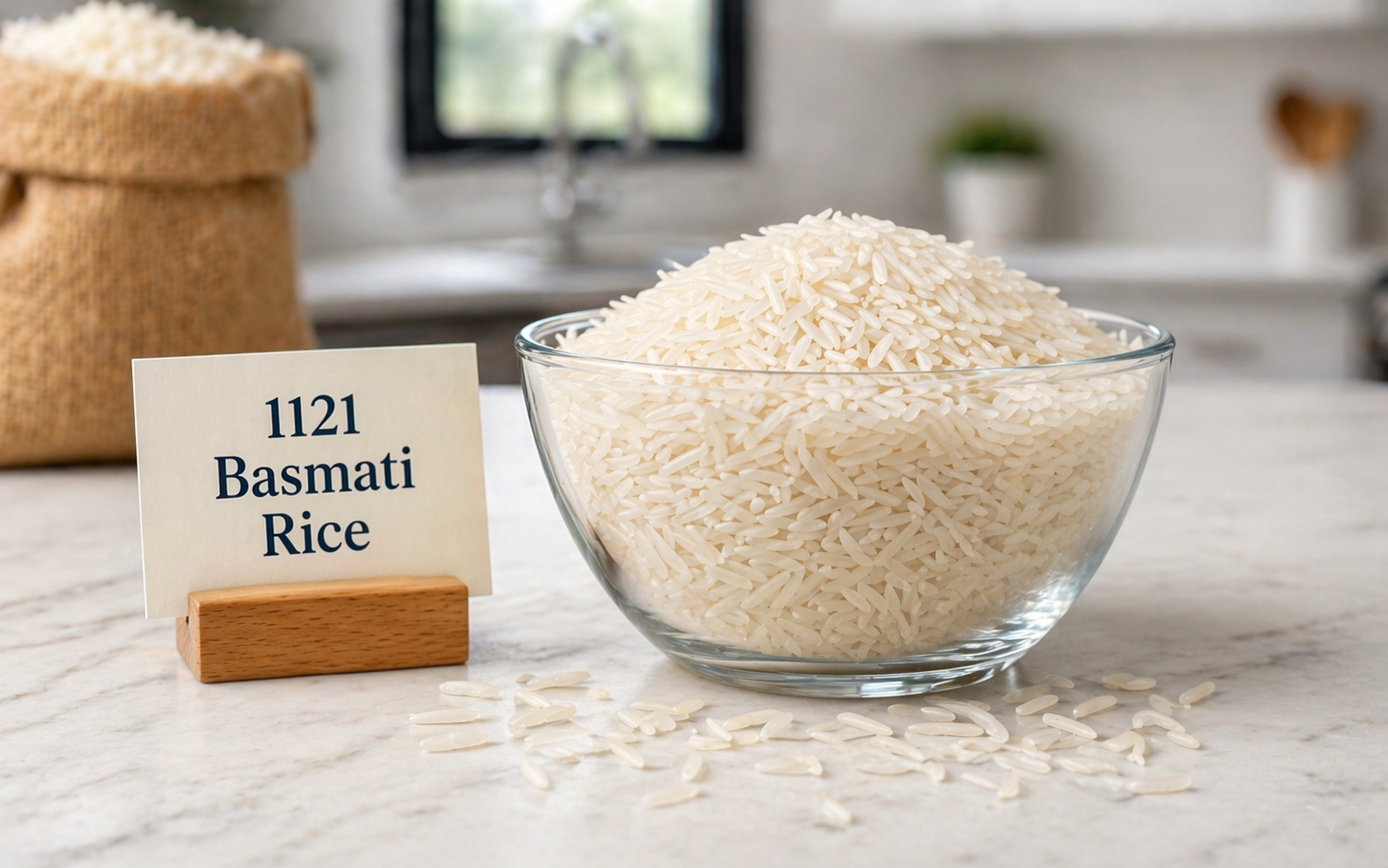
1121 Basmati
An extra-long grain variety that elongates further on cooking, a strong seller for UK retail and food service.
1509 Basmati
An aromatic long-grain variety with a light, fluffy texture, well suited to everyday and volume UK supply.
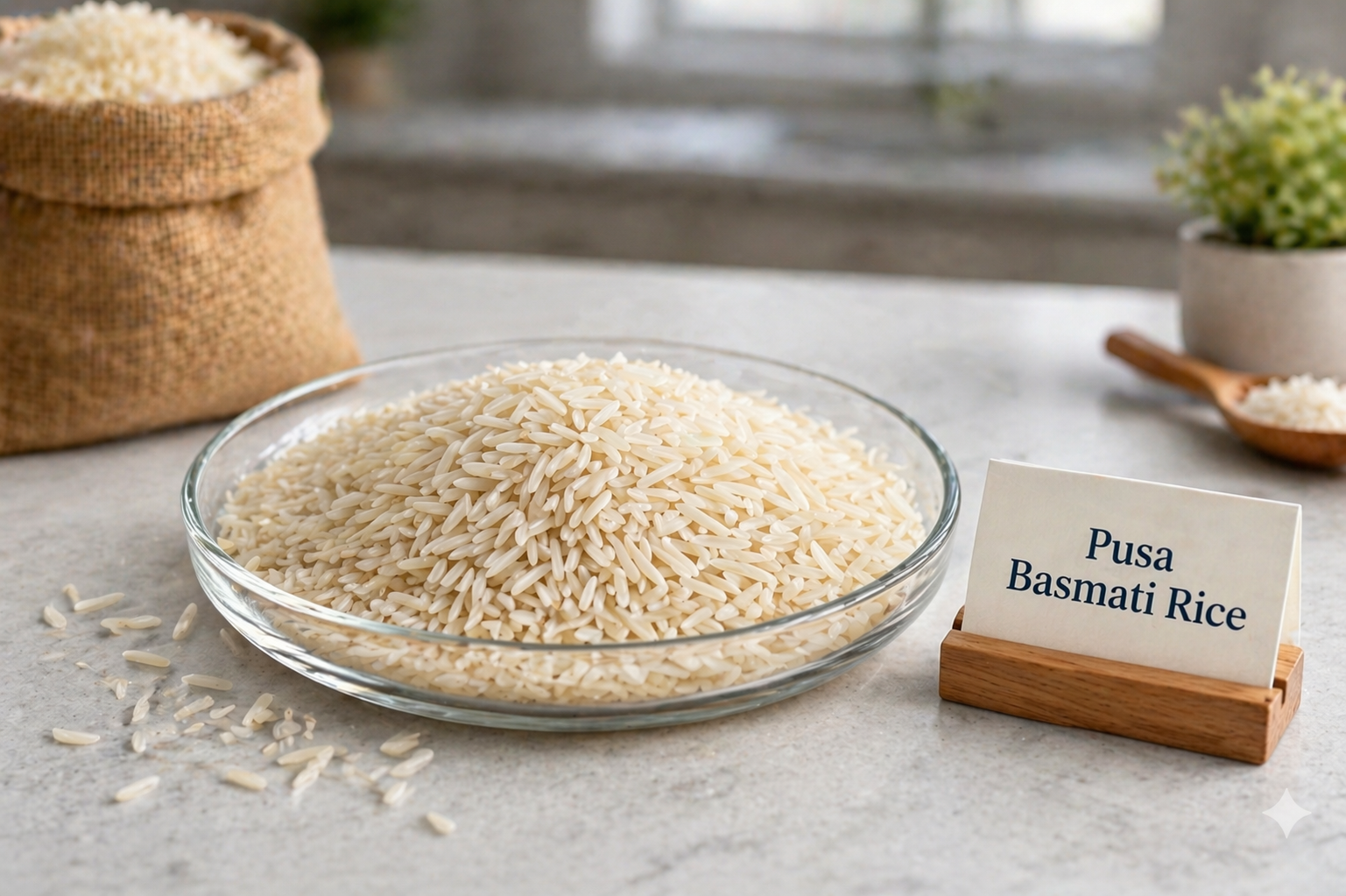
Pusa Basmati
A long-grain aromatic variety that cooks up separate and non-sticky, a familiar choice for UK grocery brands.
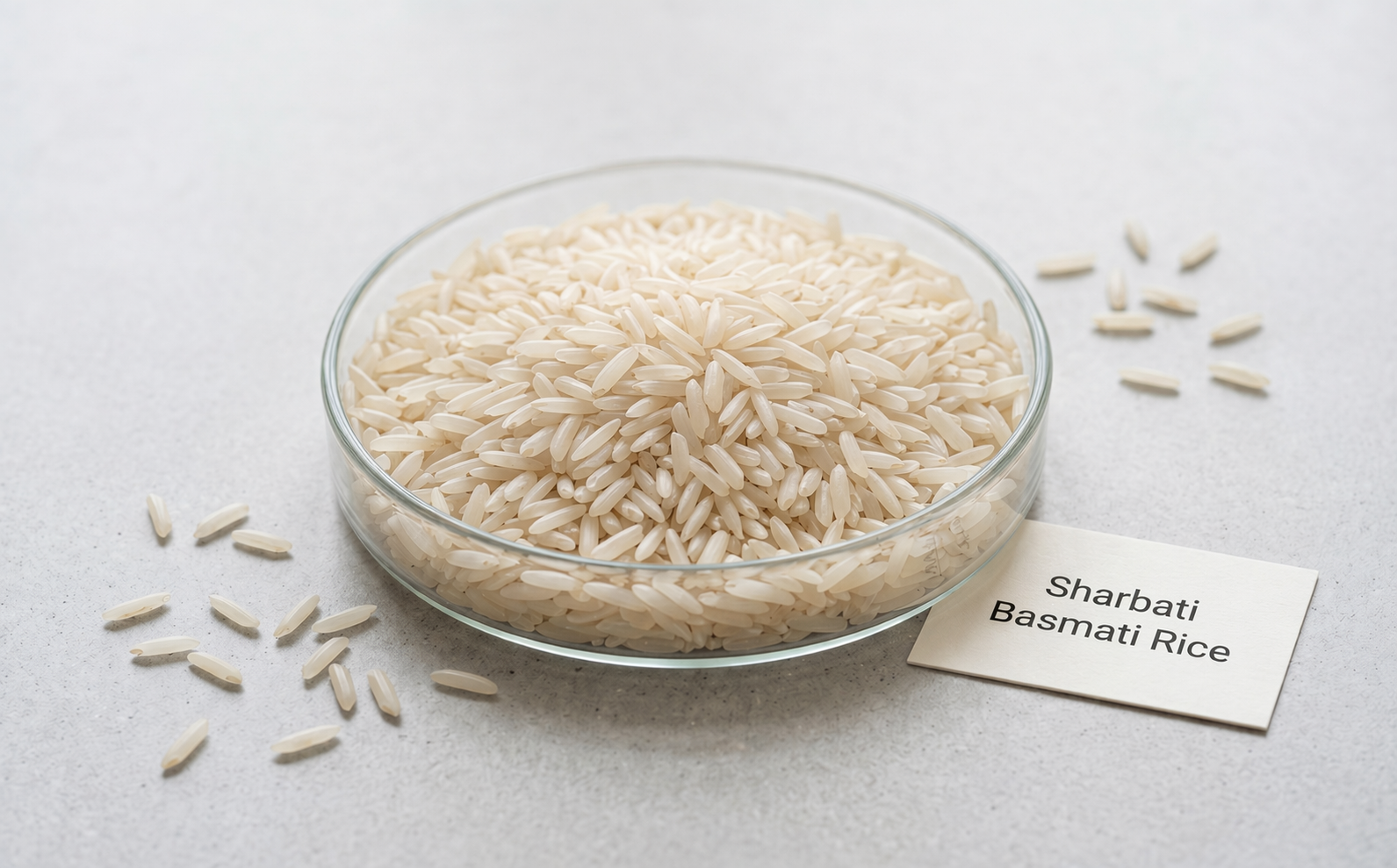
Sharbati Basmati
A versatile long-grain variety balancing aroma and yield for high-volume UK wholesale supply.
| Varieties | Processing forms | Common pack sizes |
|---|---|---|
| 1121 Basmati | Raw (white) | 1 kg |
| 1509 Basmati | Steam | 5 kg |
| 1718 Basmati | Sella (parboiled) | 10 kg |
| 1401 and 1885 Basmati | Golden Sella | 20 kg |
| Pusa, Sugandha and Sharbati | Lemon Sella | 25 kg or buyer specified |
Traditional and other varieties are available to order. Specification, grain length, aging and moisture are agreed against approved samples before packing.
Sourcing white rice as well? See the non-basmati rice range for the UK and wider markets.
Your basmati rice supplier in India for the UK market
Verified supplier network
- A strong network of verified suppliers and mills across India's basmati belt
- GI-authentic grain and samples approved before every order
UK compliance handled
- Certificate of analysis to UK residue limits, plus Defra and origin documents
- Document sets prepared for UK border controls and your customs agent
Clear commercial terms
- Orders on advance payment or letter of credit
- FOB, CFR or CIF agreed up front, retail packs to bulk
Whether you are a UK importer, wholesaler or retail brand, Alstoe supplies the same verified basmati range worldwide. Explore the full basmati rice range, or see related markets below.
Importing basmati rice from India to the UK: FAQs
What do I need to import basmati rice from India to the UK?
On the UK side, you trade as a registered UK business with an EORI number and use a customs agent to file the import declaration, and you register for VAT to reclaim import VAT. On the Indian side, the supplier holds an Import Export Code from the DGFT and APEDA registration, and supplies GI-authentic basmati with the required certificates.
What are the UK pesticide (MRL) limits for basmati rice?
The UK enforces strict maximum residue levels, and the fungicide tricyclazole is limited to 0.01 mg/kg. Because basmati has a history of residue rejections, every consignment is tested by an accredited lab and travels with an independent certificate of analysis obtained before shipping.
Is basmati rice from India duty-free under the UK and India trade deal?
No. Basmati is classed as milled rice, which is excluded from the tariff cuts in the UK and India trade agreement, so it continues to attract the UK's standard import duty. Standard-rate VAT also applies and is reclaimable for a VAT-registered importer. Your customs agent confirms the exact figures.
Which documents are needed to clear basmati rice into the UK?
The core set is the commercial invoice, packing list, bill of lading, certificate of origin, Defra phytosanitary certificate, fumigation certificate, health certificate and a certificate of analysis for residues. Your EORI number and an import declaration through a customs agent complete the clearance.
Which ports are used for basmati shipments to the UK?
Cargo usually arrives at Felixstowe, Southampton or London Gateway, having loaded at Mundra or Nhava Sheva in India. Rice typically moves in 20 ft containers holding roughly 20 to 28 tonnes.
How do I find a reliable basmati rice supplier in India for the UK?
Work with an APEDA-registered supplier that provides GI-authentic grain, approves samples against your specification, and supplies a certificate of analysis to UK residue limits with every consignment. Alstoe coordinates sourcing and the full document set from a verified supplier network.
What are the payment terms?
Orders are handled on advance payment or against a letter of credit. The commercial terms, including FOB, CFR or CIF, are agreed before the order is confirmed.
Can you supply retail packs as well as bulk?
Yes. The supplier network packs from small consumer retail packs up to bulk sizes, with English labelling, in the varieties and forms UK grocery, wholesale and food service buyers ask for. Specification and grade are approved against samples before packing.
Source basmati rice for the UK
Share your variety, grade, pack size, quantity and destination, and Alstoe India Exports will prepare a quotation with samples and a residue-tested document set from a verified supplier network. Orders on advance payment or letter of credit.