
Import Basmati Rice from India to Iran
A clear, compliance-first guide to sourcing naturally aged Indian basmati for the Iranian market, covering export registrations, Iran order registration, documentation and shipping. Alstoe India Exports connects Iranian buyers with a strong network of verified suppliers.
How to import basmati rice from India to Iran
To import basmati rice from India to Iran, the Indian supplier holds an Import Export Code (IEC) from the DGFT and is registered with APEDA, because basmati is an APEDA-scheduled product. Iranian buyers favour naturally aged long-grain varieties such as 1121, 1509 and Pusa. On the buyer side, the Iranian importer registers the purchase in the Integrated Trade System (NTSW) and obtains an import order registration number through the Ministry of Industry, Mine and Trade. Every shipment carries a certificate of origin, a phytosanitary certificate, a fumigation certificate and a health certificate, and packaging is labelled in Farsi and English, usually with halal certification. Cargo ships from Mundra, Kandla or Nhava Sheva (JNPT) to Bandar Abbas or Chabahar. Payment is arranged on advance payment or letter of credit, with settlement routes confirmed for each order.
What you need on each side of the trade
The requirements split cleanly into what the Indian exporter arranges and what applies on entry into Iran. Use this as a checklist before your first shipment.
- Import Export Code (IEC), issued by DGFT
- APEDA registration (RCMC) for scheduled products
- Phytosanitary Certificate from plant quarantine
- Certificate of Origin from an authorised agency
- Fumigation certificate for the consignment
- Health certificate and certificate of analysis
- Import order registration through NTSW and MIMT
- Commercial card from the Iran Chamber of Commerce
- Compliance with Iran national standards (INSO)
- Labelling in Farsi and English
- Halal certificate, commonly required
- Shipment timed to Iran's open import window
How much basmati rice does Iran import from India?
India supplies the majority of the world's basmati rice, and Iran has long been one of its largest markets.
For many years Iran was India's single biggest basmati destination. During April to February of 2024-25, Iran imported around 644,000 tonnes of Indian basmati rice, which placed it third among India's basmati markets behind Saudi Arabia and Iraq, and it accounted for close to a seventh of India's basmati export volume that year. Iranian demand moves from year to year with the country's harvest, economic conditions and import policy, so shipment timing and terms are planned for each season.
Iranian buyers typically want naturally aged long-grain aromatic basmati in raw and sella forms, packed to the grade and bag size their distribution channel needs, spanning wholesale trade, retail brands and institutional supply.
Trade figures reflect published Indian export data for April to February 2024-25 and are provided for context. Volumes to Iran vary year to year with harvest, policy and payment conditions.
Importing basmati rice from India to Iran, step by step
Confirm Indian export registrations
The supplier must hold an IEC from the DGFT and be registered with APEDA. Basmati is a scheduled agricultural product, so APEDA registration is the base requirement for a compliant export.
Choose variety, aging and packing
Agree the variety and how long it is aged, the milling form and moisture, the bag size and the labelling. Iranian buyers value naturally aged grain, and packaging is prepared in Farsi and English, usually with halal certification.
Register the order in Iran
The Iranian buyer registers the purchase in the Integrated Trade System (NTSW) and obtains an import order registration number through the Ministry of Industry, Mine and Trade. Orders are timed to the open import window, since Iran restricts rice imports during its domestic harvest.
Prepare documents and testing
Commercial invoice, packing list, bill of lading, certificate of origin, phytosanitary certificate, fumigation certificate, health certificate and a certificate of analysis are compiled so the cargo meets Iran's food-safety standards and clears cleanly.
Ship to Bandar Abbas or Chabahar
Cargo loads at Mundra, Kandla or Nhava Sheva and sails to Bandar Abbas or Chabahar. Transit typically runs about one to two weeks, and conditions in the Gulf can affect freight and insurance.
Clear customs and take delivery
Iran Customs (IRICA) clears the consignment against the order registration and the national standards, after which the cargo moves to the buyer's warehouse or distribution point.
What the Indian exporter must have in place
Registrations
- Import Export Code (IEC) from the DGFT
- APEDA registration cum membership for basmati
- GST registration for export invoicing
Quality and plant health
- Phytosanitary Certificate from plant quarantine
- Fumigation certificate for the container
- Certificate of analysis for pesticide residues
Trade documents
- Certificate of Origin from an authorised agency
- Commercial invoice and packing list
- Bill of lading from the shipping line
Food safety and quality certifications such as FSSAI, HACCP and ISO are held across the supplier and manufacturer network, and the relevant certificates travel with each consignment. Because Iran applies food-safety standards through its national standards body, consignments are tested and travel with a certificate of analysis confirming pesticide residues within accepted limits. Alstoe coordinates the paperwork end to end so an Iranian buyer receives a document set that matches the order and the destination requirements.
Rules that apply on entry into Iran
Order registration
- Buyer registers in the Integrated Trade System (NTSW)
- Commercial card from the Iran Chamber of Commerce
- Import order registration number through MIMT, with HS code and origin declared
Standards and labelling
- Goods meet Iran national standards (INSO)
- Health certificate for food consignments
- Labels in Farsi and English, with halal certification commonly required
Import timing
- Iran restricts or halts rice imports during its domestic harvest
- The restriction usually runs from late summer into autumn
- Orders are timed to the open import window
Requirements are set by the Iranian authorities and can change with policy and season, so the exact certificate set and the import window are confirmed for each shipment before loading.
How payment is arranged
Payment for India to Iran trade is handled on advance payment or against a letter of credit.
Because trade between India and Iran involves specific banking and settlement arrangements, the payment route is agreed and confirmed for each order before the cargo is shipped. Accurate and consistent documentation across the invoice, packing list and certificates is essential for clean clearance, so the paperwork is prepared carefully and checked against the order registration.
Documents that travel with the shipment
For clean clearance in Iran, the following accompany a basmati consignment. The precise set is confirmed against the order, the buyer's order registration and the destination requirements.
- Commercial invoice
- Packing list
- Bill of lading
- Certificate of Origin
- Phytosanitary Certificate
- Fumigation certificate
- Health certificate
- Halal certificate
- Certificate of analysis (pesticide residues)
- Weight certificate
- Insurance certificate (for CIF terms)
- Import order registration number (buyer)
Ports, containers and packing options
| Element | Detail |
|---|---|
| Loading ports in India | Mundra, Kandla (Deendayal) and Nhava Sheva (JNPT) |
| Destination ports | Bandar Abbas (Shahid Rajaee), Chabahar and Bandar Imam Khomeini |
| Containers | 20 ft and 40 ft, with rice usually moving in weight-optimised 20 ft units |
| Packing | Woven polypropylene or jute bags in common sizes from 5 to 50 kg, or as the buyer specifies, with Farsi and English printing |
| Transit time | Around one to two weeks, depending on the port and routing |
| Trade terms | FOB, CFR and CIF are all workable, agreed at the time of order |
Conditions in the Gulf and around the Strait of Hormuz can affect vessel availability, freight and insurance, so routing and timelines are confirmed at booking.
Basmati varieties and forms for the Iranian market
The supplier network mills, ages and packs a full spread of basmati varieties in the forms Iranian buyers ask for. These varieties are part of the wider basmati rice range, and every lot is packed to an agreed grade and specification.
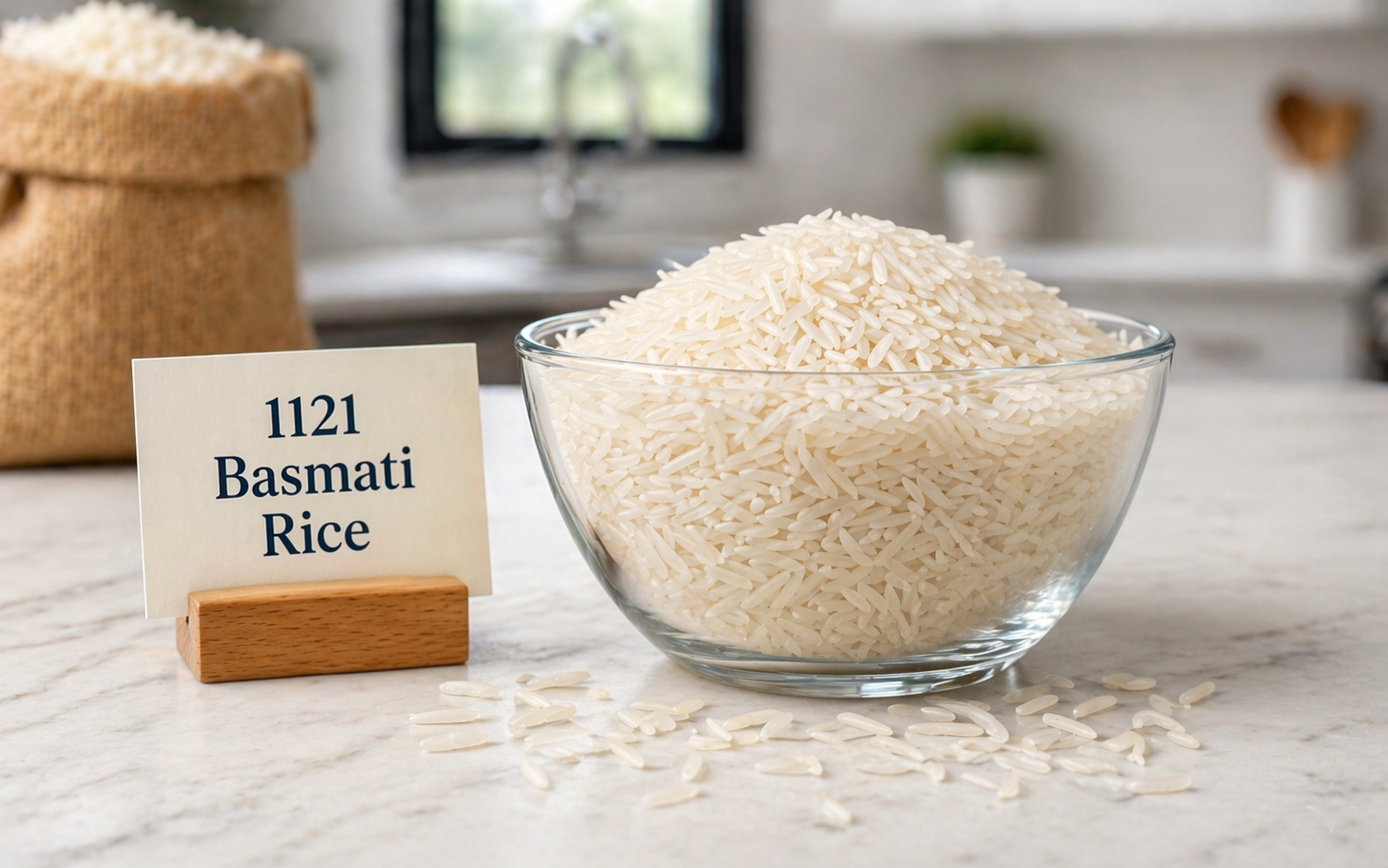
1121 Basmati
An extra-long grain variety that elongates further on cooking, often supplied naturally aged for the Iranian table.
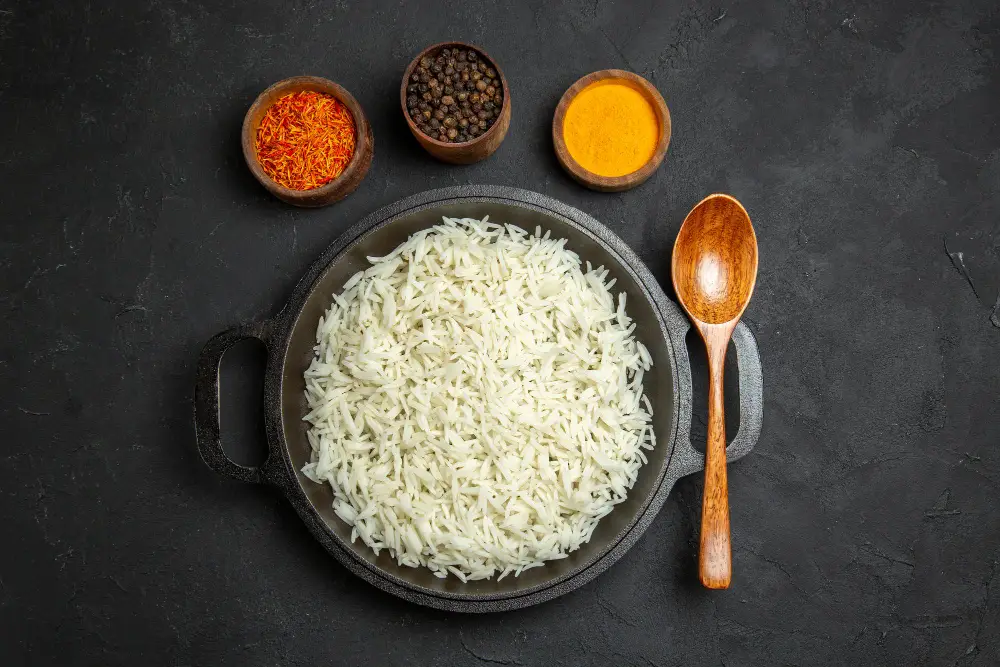
1509 Basmati
An aromatic long-grain variety with a soft, fluffy texture, widely sourced for Iran in aged form.
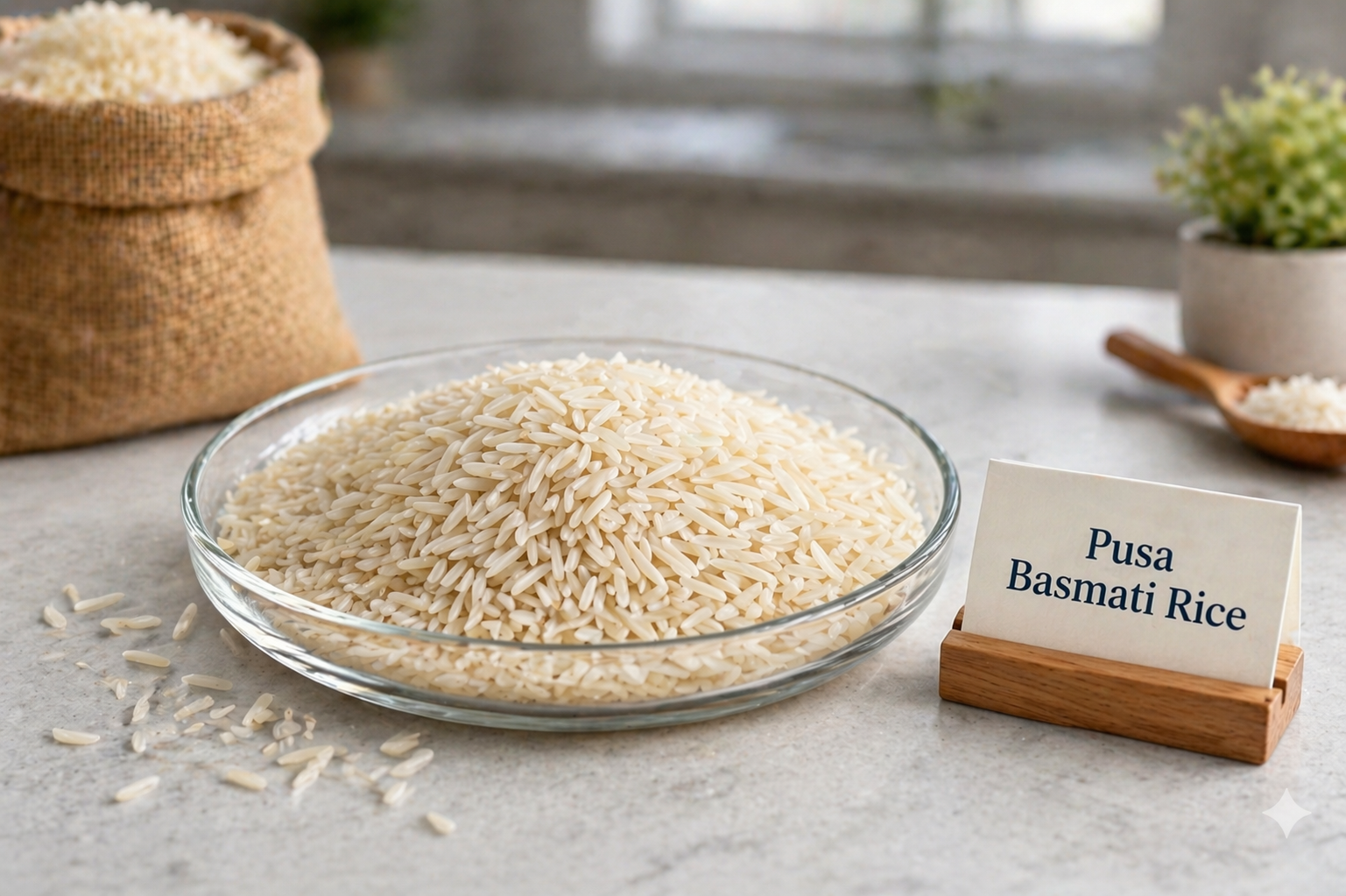
Pusa Basmati
A long-grain aromatic variety that cooks up separate and non-sticky, a familiar choice for Iranian buyers.
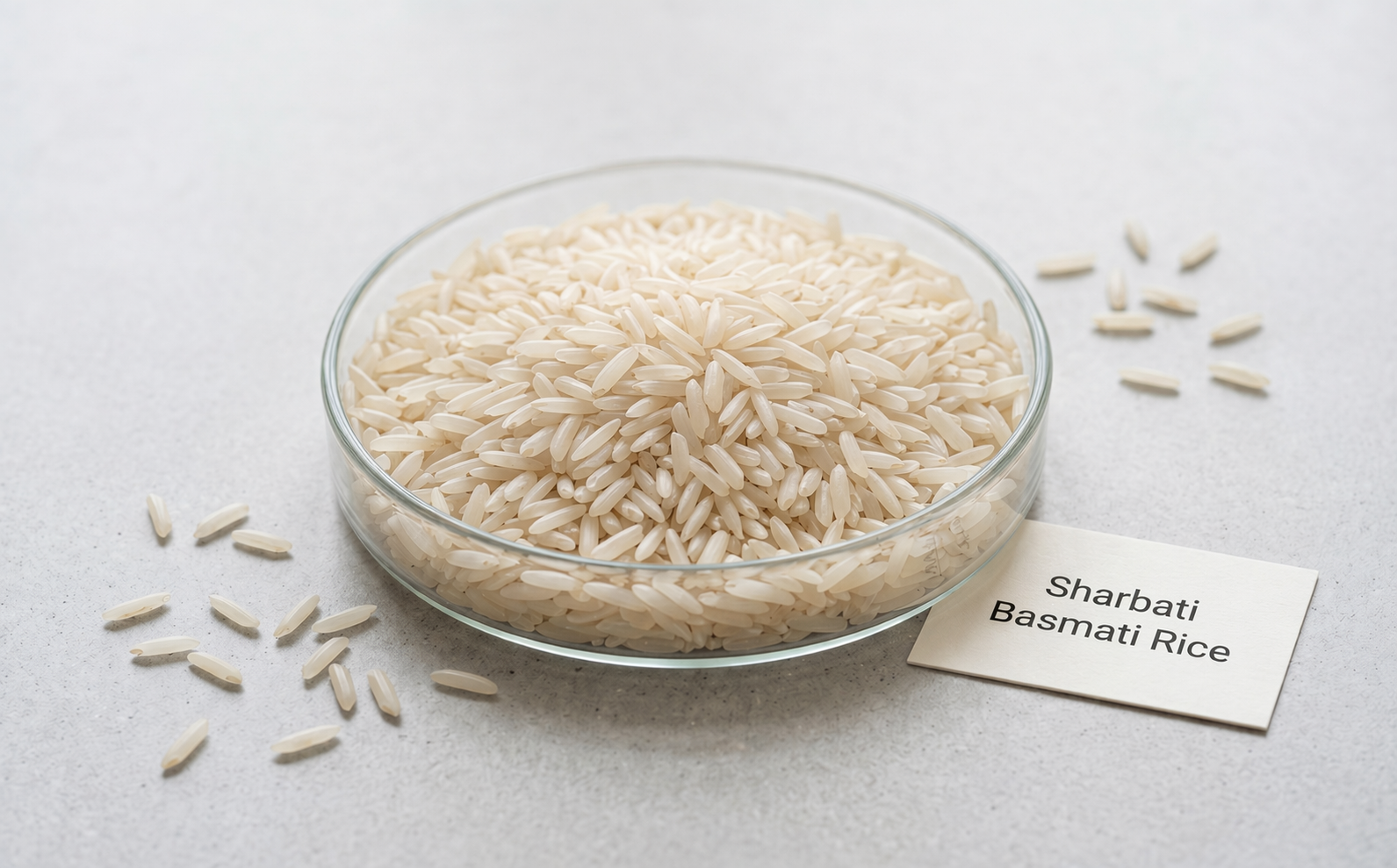
Sharbati Basmati
A versatile long-grain variety balancing aroma and yield for high-volume Iranian supply.
| Varieties | Processing forms | Common bag sizes |
|---|---|---|
| 1121 Basmati | Raw (white) | 5 kg |
| 1509 Basmati | Steam | 10 kg |
| 1718 Basmati | Sella (parboiled) | 25 kg |
| 1401 and 1885 Basmati | Golden Sella | 40 kg |
| Pusa, Sugandha and Sharbati | Lemon Sella | 50 kg or buyer specified |
Traditional and other varieties are available to order. Specification, grain length, aging and moisture are agreed against approved samples before packing.
Sourcing white rice as well? See the non-basmati rice range for Iran and wider markets.
A single point of contact for Iran-bound basmati
Verified supplier network
- A strong network of verified suppliers and mills across India's basmati belt
- Naturally aged grain and samples approved before every order
Compliance handled
- Export registrations, phytosanitary, origin and analysis documents coordinated for you
- Document sets aligned with the buyer's Iran order registration
Clear commercial terms
- Orders on advance payment or letter of credit
- FOB, CFR or CIF agreed up front with settlement routes confirmed per order
Alstoe supplies the same verified basmati range across West Asia and the Gulf. Explore the full basmati rice range, or see related markets below.
Importing basmati rice from India to Iran: FAQs
What registrations are needed to import basmati rice from India to Iran?
On the Indian side, the supplier needs an Import Export Code from the DGFT and APEDA registration, since basmati is a scheduled product. On the Iranian side, the importer registers the purchase in the Integrated Trade System (NTSW), holds a commercial card from the Iran Chamber of Commerce, and obtains an import order registration number through the Ministry of Industry, Mine and Trade.
Does Iran ban rice imports at certain times of the year?
Yes. To protect its domestic growers, Iran restricts or halts rice imports during its harvest, which usually runs from late summer into autumn. Because the exact dates shift each year, orders are timed to the open import window and confirmed before shipment.
Which ports are used for basmati shipments to Iran?
Most sea shipments arrive at Bandar Abbas (Shahid Rajaee), Iran's largest port, with Chabahar and Bandar Imam Khomeini also used. Cargo typically loads at Mundra, Kandla or Nhava Sheva in India.
What documents accompany a basmati consignment to Iran?
The core set is the commercial invoice, packing list, bill of lading, certificate of origin, phytosanitary certificate, fumigation certificate, health certificate, halal certificate and a certificate of analysis for pesticide residues. The buyer's import order registration number is needed for clearance.
Does basmati rice packaging for Iran need Farsi labelling?
Yes. Packaging is labelled in Farsi and English with the product name, country of origin, net weight and dates, and it usually carries halal certification, in line with Iran's national standards.
How is payment handled for India to Iran rice trade?
Orders are handled on advance payment or against a letter of credit. Because the trade involves specific banking and settlement arrangements, the payment route is agreed and confirmed for each order before the cargo ships.
How long does shipping from India to Iran take?
Sea transit to Bandar Abbas or Chabahar generally runs about one to two weeks, depending on the shipping line, port and routing. Conditions in the Gulf can affect freight and timelines, which are confirmed at booking.
Which basmati varieties does the Iranian market prefer?
Iranian buyers favour naturally aged long-grain aromatic basmati such as 1121, 1509 and Pusa, with Sharbati used for high-volume supply. Specification, aging and grade are approved against samples before packing.
Source basmati rice for Iran
Share your variety, aging, grade, quantity and destination, and Alstoe India Exports will prepare a quotation with samples from a verified supplier network. Orders on advance payment or letter of credit.